


Solitaire Real Money-Win Money
4.79.88K Reviews
App Specs
- Version
- 2.2
- Updated On
- License
- Free
- Downloads
- 1,000,000+
- Developer
- ASDGame
- Categories
- Card
- Platform
- Android
Screenshots
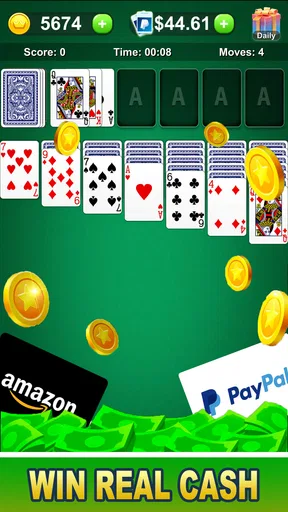
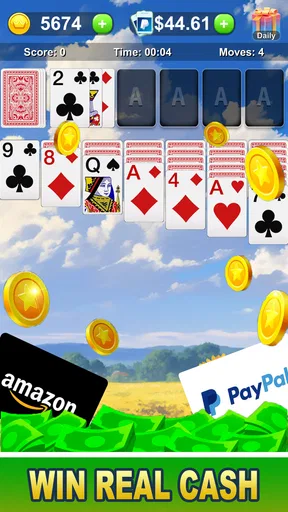
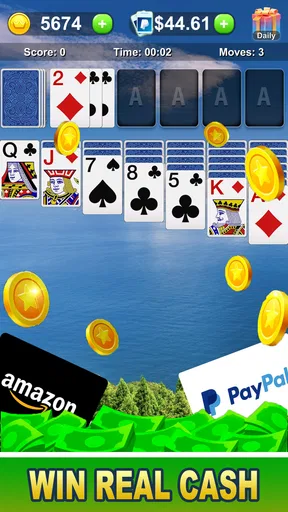


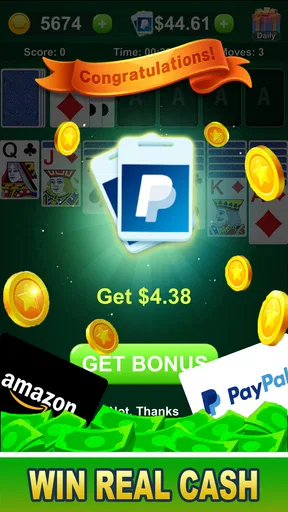
 Analysis by AppCompare
I went into Solitaire Real Money-Win Money expecting a familiar card game with a cash-focused twist, and that is exactly where its appeal begins. The basic attraction is immediate: you deal a classic solitaire layout, make decisions one card at a time, receive quick feedback when a move works, and then decide whether the result is good enough to start another round. It is a simple loop, but the possibility of cash prizes gives each choice more weight than it has in a purely relaxing solitaire app.
Developed by ASDGame, this free card game is aimed at adults and carries a Mature 17+ content rating. It has built a substantial audience, with over a million installs, an average rating of 4.7 from around 81 thousand ratings, and roughly 9.9 thousand written reviews. Those figures suggest that the concept has found a receptive audience, although popularity should not be confused with guaranteed winnings. I see it as a game to approach for its short, repeatable card sessions first, with the prize element treated as an additional possibility rather than the sole reason to install it.
How the solitaire loop feels from the first move to the next round
I find the first round easiest to judge when I treat it as a sequence of choices, not a race to clear cards: each move changes what I can see and what remains possible. That makes the familiar solitaire format feel focused from the outset, while the prize-oriented framing gives the end of a deal extra weight. Next, I’d look at the small setup checks that help keep that experience comfortable and expectations grounded.
The first action is familiar, but the stakes change the mood
The easiest way to understand this game is to start playing rather than reading its promise. The first move feels like ordinary solitaire: I look for an available card, decide whether moving it will reveal something useful, and try to build a sequence without closing off the layout. That familiarity matters because there is no need to learn an entirely new card system before the game becomes enjoyable.
What changes is my attitude toward each move. In a casual solitaire app, an inefficient decision usually costs only a few seconds or forces a restart. Here, the cash-prize framing makes me think more carefully about whether a move is genuinely useful or merely available. I pay closer attention to hidden cards, open columns, and the order in which I expose new options. That extra attention makes a straightforward card layout feel more deliberate.
For someone who already plays solitaire on a phone, the learning curve should feel gentle. For a newcomer, the most important habit is not rushing to move the first card that can be moved. I get better results by checking the whole layout, considering which action opens the most future choices, and only then committing. This is one of the small but meaningful differences between tapping through a free puzzle and playing with a reward-oriented objective.
The game works best when I treat every deal as a compact decision problem. A move can help immediately while making the next few moves harder, so I try to distinguish between visible progress and useful progress. Moving a card simply because it fits is not always the strongest choice. Revealing a face-down card or freeing a column can be more valuable, even if it does not create the most attractive sequence on the screen.
Worth Reading Before You Choose

EA SPORTS FC Mobile 26 Is a Bigger Football Game, but It Takes Time

Flipboard Shows What News Apps Must Do Beyond the Feed

Switching to Android Auto Means Rethinking Your Driving Routine

Google Calendar Makes a Crowded Week Easier to Manage

Ludo King Makes the Most of the Minutes Between Plans

Baby Panda World Brings Quick Play to Modern Phones, but Its Game Library Feels Busy
The feedback rhythm keeps the round moving
Solitaire succeeds when the feedback arrives quickly enough to connect an action with its consequence. I make a move, the layout changes, a new card may become available, and I immediately know whether I have created another opportunity or reduced my options. That rhythm is the heart of the experience here. The game does not need complicated controls to hold my attention; it relies on a steady chain of small decisions and visible results.
I especially notice the rhythm during the middle of a round. The opening moves are usually easy to identify, while the ending can become constrained. The interesting section is between those points, when several cards appear playable and I need to choose the order that preserves flexibility. A successful move creates a small burst of momentum. A poor move makes the layout feel tighter, and that friction encourages me to review my next choice instead of tapping automatically.
That is also where the app differs from solitaire games designed only for relaxation. Traditional alternatives often let me play with decorative themes, gentle pacing, or no meaningful consequence for a mistake. This title puts more emphasis on the outcome of the round. The feedback is not just “the board looks cleaner”; it is tied to whether the session feels productive enough to continue.
My practical tip is to pause briefly whenever two moves look equally attractive. I check which one exposes a concealed card, which one preserves an empty space, and which one keeps more sequences possible. That pause is especially useful on a small phone screen, where it is easy to focus on one visible card and overlook a better move elsewhere in the layout. It turns the game from reflexive tapping into a more controlled routine.
The reward idea adds motivation, but it should not replace good judgement
The central promise is the chance to win cash prizes through classic solitaire play. That gives the game a clear reason to begin another session: I am not only trying to complete a layout; I am also testing whether a careful round can produce a worthwhile result. The reward layer makes a familiar card game feel more goal-driven, particularly for players who lose interest when there is no outcome beyond a personal score or a completed board.
At the same time, I would not install it expecting every round to become a reliable source of money. A prize-based game should be treated as entertainment, not as an income plan. Results can depend on the rules of the particular mode, the outcome of a deal, and the conditions attached to participation. Before spending time or making any decision connected with a prize, I would read the in-game instructions closely and make sure I understand the eligibility requirements and withdrawal process presented there.
This is also why the Mature 17+ rating deserves attention. The age label is not something I would ignore simply because the cards look familiar. Anyone considering the game should approach the cash element responsibly, set a personal limit for time and spending if applicable, and avoid treating a losing session as a reason to keep playing until the result changes. The strongest use case is a short, controlled game break, not an attempt to recover money or chase a reward.
For an adult who enjoys solitaire and likes having a concrete reason to finish a round, the reward structure can make the familiar mechanics more engaging. For someone who wants a completely pressure-free card game, a standard solitaire app may be a better fit. The difference is not the card layout alone; it is the emotional weight attached to the outcome.
Resetting after a round is part of the appeal
One of the reasons solitaire remains so easy to return to is that a completed or failed deal creates a clean reset. I do not need to remember a long story, manage a character, or reconstruct a complicated strategy tree. The previous layout ends, I take a breath, and the next session begins with a new set of possibilities. That reset is particularly effective here because the reward question gives the next deal a fresh purpose.
A realistic everyday scenario would be a short break between tasks. I might have only enough time for one focused round, so I can open the game, make deliberate moves, and stop when the deal ends rather than committing to a long campaign. If the round goes well, the reward possibility gives the session a satisfying finish. If it does not, the reset makes it easy to put the phone away instead of feeling that I have abandoned a larger objective.
The same reset can work against the player, though. Because a new round is always available, it is easy to continue longer than planned. The prompt to begin again is not necessarily a sign that the last session was enjoyable; sometimes it is simply the attraction of a cleaner board and another chance. I recommend deciding in advance how many rounds fit into the break. That small boundary helps keep the game recreational rather than turning the reset into an endless loop.
I also find the reset useful when I make an obviously poor decision early in a deal. In a slower strategy game, restarting might feel like throwing away substantial progress. In solitaire, the board is compact enough that starting over feels natural. The trade-off is that a quick restart can prevent me from learning why the position became difficult. When I have time, I prefer to inspect the remaining layout and identify the decision that reduced my options before beginning again.
Where it fits among other card games
Compared with a conventional free solitaire app, this game has a stronger external objective. A traditional version is usually better for quiet practice, visual customization, or completely consequence-free play. It can also be the wiser choice for younger users or anyone who wants to avoid prize-related pressure. In contrast, ASDGame’s title is more suitable for an adult who already understands solitaire and wants the possibility of cash prizes to make familiar rounds feel more purposeful.
Compared with broader casino-style card apps, the solitaire format is more approachable and less dependent on learning several games. I can focus on planning sequences and exposing cards rather than learning poker hands or switching between tables. That simplicity is a strength, but it also means the experience may feel narrow to players who need variety. If I want social competition, deep progression, or a wide selection of card modes, a larger card-game collection may offer more long-term variety.
There is another important trade-off: solitaire gives me a greater sense of personal control than a game built almost entirely around random outcomes, but control does not eliminate uncertainty. The order of the cards still matters, and a careful player cannot guarantee a favorable result from every deal. I appreciate the strategic element, yet I would be cautious about interpreting a good run as proof that every future round can be managed the same way.
Practical habits that make sessions clearer
My first useful habit is to scan before acting. I look for moves that reveal hidden information rather than focusing only on moves that extend an existing sequence. New information often creates more options, while a visually neat sequence can sometimes leave the important cards buried. This is a small distinction, but it changes how I approach the opening of a deal.
My second habit is to protect flexibility. When an empty column or an open space becomes available, I do not automatically fill it with the first eligible card. I consider whether using that space will help expose a valuable card or simply relocate a sequence without improving the position. Preserving a future choice is often more useful than producing an immediate visual improvement.
My third habit is to separate game decisions from reward decisions. I play the cards as well as I can, but I do not let the possibility of a prize persuade me to continue beyond the limit I set for myself. If the app presents conditions for a reward, I read them before assuming that a successful-looking round has the result I expect. This separation keeps the strategy focused and reduces the temptation to chase an outcome.
Finally, I use short sessions to judge whether the game suits me. I do not need to commit to a long routine just because the install is free. A few rounds are enough to tell whether the familiar mechanics, the reward structure, and the pace of resetting match what I want from a mobile card game. If I find myself thinking more about the prize than the cards, that is a useful signal to step away or choose a standard solitaire alternative.
Technical details and who should consider installing it
The game is free to install, which makes trying the basic experience straightforward. It supports devices running Android 5.1 or later, and the current version is 2.2. Those requirements make it accessible to people using older compatible Android phones, although the actual comfort of play will still depend on screen size, touch responsiveness, and how easily the card layout can be viewed.
I would recommend it to an adult solitaire player who wants quick rounds with a more tangible objective than simply clearing a board. It is also a reasonable choice for someone who enjoys making small tactical decisions during short breaks and is comfortable reading the conditions connected with cash prizes. The classic format means I can understand the core action quickly, while the reward angle gives successful sessions more significance.
I would skip it if my priority were a completely relaxing, no-pressure card game. I would also look elsewhere if I wanted a rich story, extensive card-game variety, or a social experience built around friends. Players who are uncomfortable with prize-oriented mechanics should choose a conventional solitaire app instead. The free price removes one barrier to testing it, but it does not make the reward system suitable for everyone.
My verdict on the complete action-feedback-reward-reset loop
What makes this game work is not a complicated feature list; it is the compact loop. I choose a card, see the layout respond, judge whether the position is improving, and continue toward the end of the deal. The possibility of a cash prize gives the finish more importance, while the immediate reset makes another session easy to start. That structure is simple enough for a quick break but thoughtful enough to reward players who plan instead of tapping randomly.
My main reservation is the same feature that gives the game its identity. Cash-prize framing can make solitaire more motivating, but it can also make a harmless card break feel more consequential than it should. I would keep sessions controlled, read the in-game terms carefully, and never treat the game as a dependable way to make money. With that mindset, the app offers a focused variation on a familiar card category.
Overall, I see it as a good match for adults who already like solitaire and want a reason to care about the result of each deal. It is less convincing as a universal replacement for every solitaire app, because players seeking pure relaxation or broader variety may prefer the usual alternatives. For the right audience, however, the strongest part of the experience is the clean cycle of action, feedback, reward, and reset: each round is easy to enter, easy to understand, and compelling enough to make the next deal feel like a fresh decision rather than a simple repeat.
Pros
- Simple solitaire rules make it easy for beginners to start playing.
- Quick rounds fit well into short breaks or daily commutes.
- Cash prizes can add extra excitement for competitive players.
- The interface is generally easy to navigate on mobile screens.
- Players can practice strategy while enjoying a familiar card game.
Cons
- Real-money play may not be available in every country or region.
- Withdrawals can require identity checks and may take time to process.
- Some contests may require entry fees or deposits to participate.
- Results can depend partly on card deals and luck
- not only skill.
- Frequent play may encourage spending more than originally planned.
FAQs for Solitaire Real Money-Win Money
Is Solitaire Real Money-Win Money legitimate, and can players really win cash?
Solitaire Real Money-Win Money is designed around competitive solitaire matches in which players may have the opportunity to win real-money rewards, depending on the game mode, location, and applicable rules. However, winnings are not guaranteed. Results can depend on skill, timing, opponents, entry fees, promotions, and platform availability. Always read the official terms before depositing or entering paid tournaments.
Do I need to deposit money to play Solitaire Real Money-Win Money?
Not necessarily. Applications of this type commonly include free practice games, promotional bonuses, or no-entry-fee events, while cash tournaments may require an entry fee. The exact options can vary by country and account status. Before playing for money, check the tournament description carefully to understand the entry cost, prize pool, eligibility requirements, and whether any bonus funds have restrictions.
How do withdrawals work in Solitaire Real Money-Win Money?
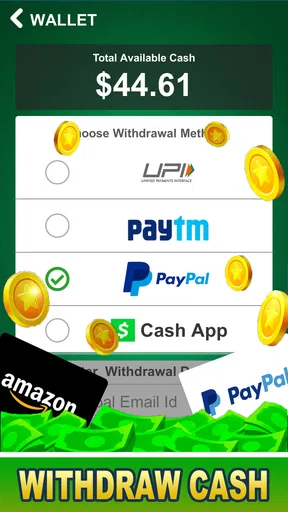
Withdrawal methods and processing times depend on the version of the app, your region, and the payment services supported by the platform. You may be asked to verify your identity before receiving funds, and minimum withdrawal amounts or processing fees may apply. Review the cashier or wallet section, confirm your personal details, and read the withdrawal policy before adding money or entering cash competitions.
Is Solitaire Real Money-Win Money available in every country and for all ages?
No. Real-money gaming apps are often restricted by local laws, licensing requirements, and age regulations. Availability may differ between Android and iOS, and some tournaments can be blocked in particular states or countries. Users generally need to meet a minimum legal age and may have to complete location or identity verification. Check the store listing and official terms for your location.
What should I know about gameplay, fairness, and responsible spending?
The app typically combines familiar solitaire rules with timed or competitive scoring, so success may depend on both decision-making and speed. Even when games are skill-based, outcomes can vary and losses are possible. Use free modes to learn the controls, set a strict spending limit, avoid chasing losses, and stop playing if it becomes stressful. Never treat tournament play as a guaranteed source of income.


